
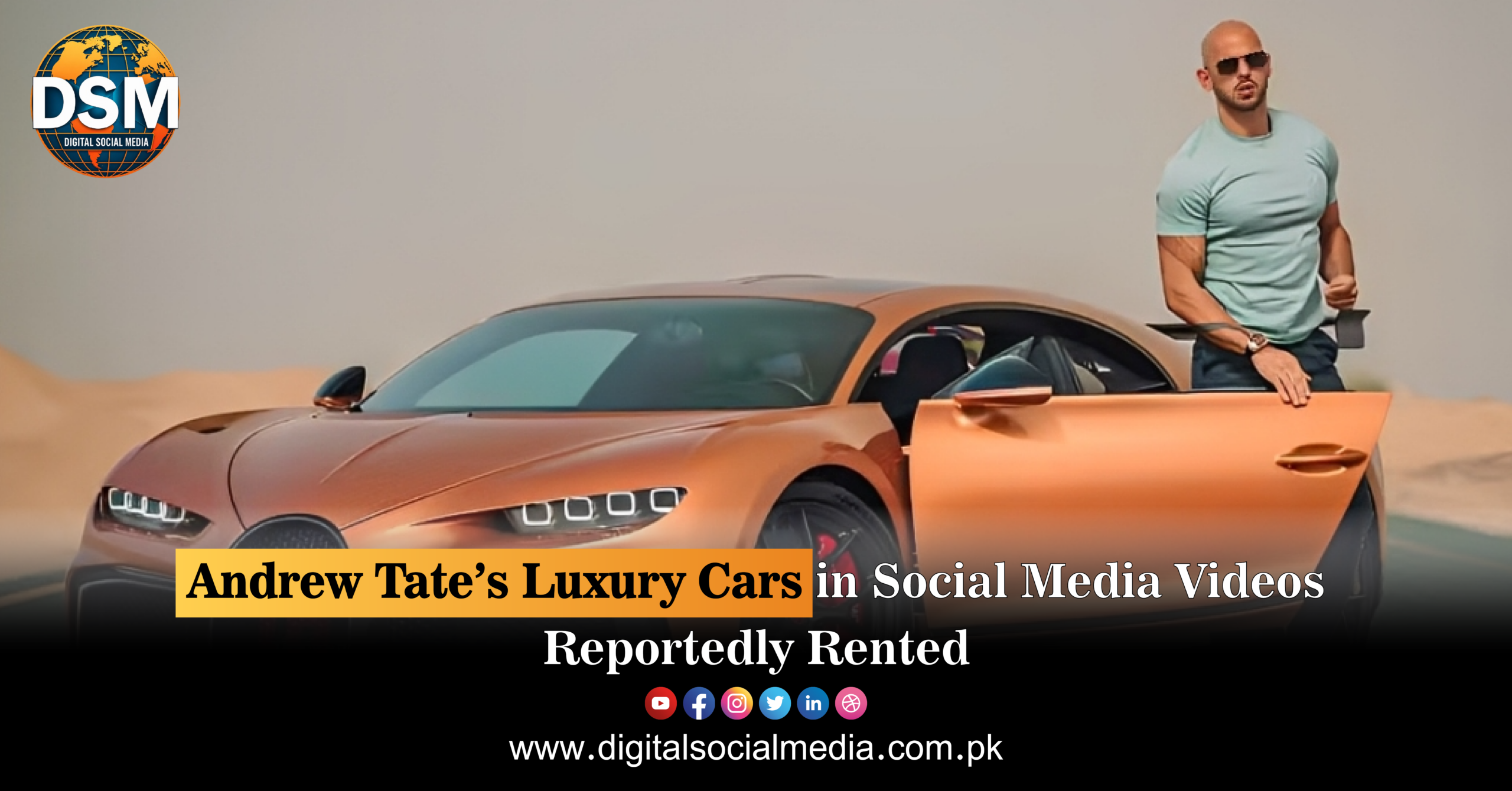
Andrew Tate’s Luxury Cars in Social Media Videos Reportedly Rented
Luxury cars have long been a prominent feature of Andrew Tate’s social media presence, often appearing alongside expensive properties, private travel, designer clothing, and other symbols of wealth. However, reports that some of the high-end vehicles featured in his online content were rented have raised questions about how social media displays of wealth can differ from reality.
The issue has attracted attention because luxury vehicles frequently play an important role in online personal branding. Expensive cars can create an image of financial success, influence, and exclusivity, particularly when presented alongside motivational or entrepreneurial content.
The reported use of rented vehicles highlights a broader question about the authenticity of wealth displayed on social media.
Luxury Cars as Part of Online Branding
Social media personalities often use luxury vehicles as visual tools to establish a particular identity.
Sports cars, supercars, and premium SUVs can immediately communicate messages of success without requiring extensive explanation. For influencers seeking to build a powerful personal brand, such imagery can become an important part of their content strategy.
Tate has frequently incorporated luxury cars into his online videos and photographs. The vehicles have contributed to an image centered around wealth, freedom, and an extravagant lifestyle.
However, owning a vehicle and temporarily renting one create very different financial realities.
Renting vs. Owning a Luxury Vehicle
Luxury car rental is a well-established business in many major cities.
High-end vehicles can be rented for short periods, allowing customers to experience cars that would otherwise require significant purchasing, maintenance, insurance, and storage costs.
For content creators, renting a luxury vehicle can also provide a practical way to produce visually appealing material without taking on the long-term costs associated with ownership.
A rented supercar may look identical to an owned vehicle in a social media video. Viewers generally cannot determine from an image alone whether the car belongs to the person behind the content.
This makes luxury imagery particularly powerful in online marketing.
The Psychology of Social Media Wealth
The reported rental claims also highlight how easily social media can influence perceptions of wealth.
Online audiences typically see carefully selected moments rather than a complete picture of someone’s finances.
A photograph showing a luxury vehicle, expensive restaurant, private aircraft, or luxury property does not necessarily reveal the underlying financial circumstances.
Content can be carefully produced to emphasize specific aspects of a lifestyle while leaving out information that provides greater context.
This does not automatically mean that every luxury lifestyle displayed online is fake. Rather, it demonstrates why individual images should not be treated as complete evidence of financial success.
Why Luxury Cars Matter to Influencers
Luxury vehicles can generate significant engagement because they attract attention.
A supercar can make a video more visually interesting, encourage viewers to stop scrolling, and become a recognizable part of a creator’s brand.
For influencers operating in competitive digital markets, this type of visual content can help differentiate their profiles.
The strategy is not limited to one personality. Luxury cars are regularly featured in content produced by automotive influencers, entrepreneurs, celebrities, and lifestyle creators.
The difference lies in how the imagery is presented and what claims are made alongside it.
Questions About Authenticity
Reports about rented vehicles raise broader questions about authenticity in influencer marketing.
When audiences see expensive cars repeatedly associated with a particular personality, they may naturally assume those vehicles are owned by that person.
If a vehicle is rented specifically for content production, that assumption may not be accurate.
This is why transparency can be important when influencers use luxury products to promote an image of financial achievement.
Audiences increasingly expect online personalities to distinguish between genuine ownership, temporary access, sponsorships, and promotional arrangements.
The Wider Influencer Economy
The controversy also reflects the growing sophistication of the influencer economy.
Content creators can rent locations, vehicles, clothing, equipment, and other luxury items specifically for shoots. Professional production companies can create highly polished environments designed to communicate particular messages.
As social media becomes more commercial, lifestyle presentation has increasingly become part of a creator’s business model.
This means viewers should consider online content as media rather than automatically treating every image as an unfiltered representation of reality.
Financial Success Cannot Be Measured by Cars
A luxury car can be an expensive asset, but it is not necessarily evidence of sustainable wealth.
Owning multiple high-end vehicles involves substantial costs, including insurance, maintenance, depreciation, registration, storage, and financing.
Similarly, renting a luxury vehicle can provide the appearance of ownership without requiring the same level of capital.
True financial strength is better evaluated through verifiable business performance, assets, income, liabilities, and long-term financial stability rather than social media imagery alone.
A Lesson for Social Media Audiences
The discussion surrounding luxury cars in Tate’s videos provides a useful reminder for social media users.
Online content is often designed to attract attention and communicate a particular narrative. Viewers should therefore avoid judging someone’s financial position solely by what appears in photographs and videos.
Luxury imagery can be real while still presenting only a carefully selected portion of someone’s lifestyle.
Understanding that distinction can help audiences make more informed judgments about online wealth and influencer marketing.
Conclusion
Reports that some luxury cars featured in Andrew Tate’s social media videos were rented have sparked wider discussion about wealth, branding, and authenticity online.
Whether used for personal transportation, promotional content, or visual storytelling, luxury vehicles can create a powerful impression on social media. However, the presence of an expensive car in a video does not necessarily establish ownership or prove the financial claims associated with an online persona.
The broader lesson is clear: social media offers a carefully curated view of reality. Audiences should look beyond luxury imagery and consider verifiable information before drawing conclusions about wealth, success, or financial status.