
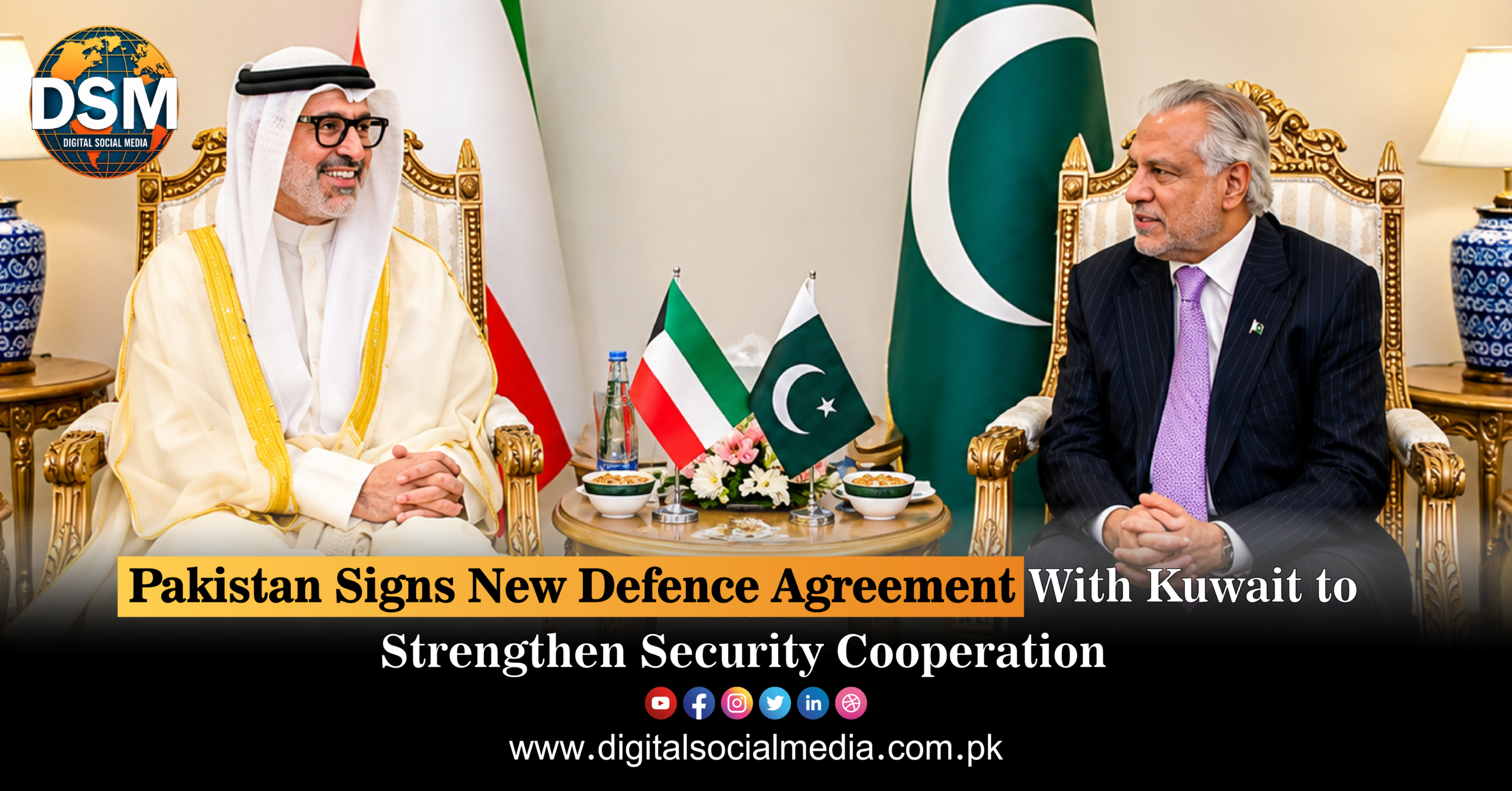
Pakistan Signs New Defence Agreement With Kuwait to Strengthen Security Cooperation
Pakistan and Kuwait have strengthened their bilateral defence relationship by signing a new defence agreement aimed at enhancing security cooperation between the two countries. The development represents another step in the longstanding relationship between Pakistan and Kuwait and highlights the importance both sides place on regional security and defence collaboration.
The agreement is expected to provide a framework for closer cooperation between the two countries in defence-related areas. It also reflects Pakistan’s broader efforts to strengthen strategic partnerships with Gulf countries and deepen security relationships across the region.
For Kuwait, cooperation with Pakistan provides access to the experience and capabilities of a country with a long-established defence sector. For Pakistan, stronger ties with Kuwait can contribute to wider diplomatic and security engagement with Gulf partners.
Strengthening Bilateral Defence Relations
Pakistan and Kuwait have maintained diplomatic relations for decades, with cooperation extending across areas such as trade, investment, labour, education, and security.
Defence cooperation has been an important component of the bilateral relationship.
The new agreement provides an opportunity to further develop this relationship through structured engagement between the two countries’ defence institutions.
Closer cooperation can include dialogue, professional interaction, training, exchanges, and coordination on areas of mutual interest.
Such arrangements can help build greater understanding between defence establishments while strengthening institutional relationships.
Importance of Pakistan-Kuwait Security Cooperation
The Gulf region has significant strategic importance because of its location, energy resources, international trade routes, and connections between Asia, Europe, and Africa.
Security developments in the region can have consequences beyond individual countries.
Pakistan has historically maintained close relations with Gulf states and has participated in defence and security cooperation with several countries in the region.
Kuwait, meanwhile, has an important role in the Gulf and maintains partnerships with regional and international countries to support its security interests.
The latest agreement adds another layer to these longstanding relations.
Pakistan’s Defence Expertise
Pakistan has developed considerable experience in military training, defence education, peacekeeping, and security operations.
Its armed forces have also maintained defence relationships with numerous international partners.
Pakistan’s defence institutions operate training facilities and professional military education programs that can support international cooperation.
Defence agreements can provide opportunities for personnel exchanges and professional development, allowing partner countries to share experiences and improve institutional capabilities.
For Pakistan, such cooperation can also strengthen its role as a security partner in the wider region.
Benefits for Kuwait
For Kuwait, deeper defence cooperation with Pakistan could provide opportunities for training, knowledge exchange, and professional engagement.
Pakistan’s experience in areas such as military education and operational planning may offer useful opportunities for cooperation.
Defence partnerships can also improve communication between military institutions and create mechanisms for consultation during regional security developments.
The agreement therefore has potential value beyond immediate defence activities.
Regional Security Context
The agreement comes against a backdrop of complex security challenges across the Middle East and South Asia.
Regional instability, maritime security concerns, terrorism, geopolitical competition, and emerging security technologies have increased the importance of international cooperation.
Countries are increasingly seeking partnerships that can improve preparedness and information sharing while supporting national security objectives.
Pakistan and Kuwait can use their bilateral relationship to strengthen cooperation on areas of shared concern.
Broader Pakistan-Gulf Relations
Pakistan’s relationship with Gulf countries extends beyond defence.
Millions of Pakistanis work across Gulf states, contributing to economic links between Pakistan and the region.
Trade, remittances, investment, energy cooperation, and diplomatic engagement are also important parts of Pakistan’s Gulf relationships.
Stronger defence ties can complement these existing connections.
A stable and constructive security relationship can contribute to broader diplomatic engagement and create a stronger foundation for cooperation in other sectors.
Defence Diplomacy and Training
Modern defence diplomacy increasingly involves more than military agreements.
Joint training programs, military education, professional exchanges, humanitarian cooperation, and disaster-response coordination can all contribute to stronger bilateral relationships.
Such initiatives can create long-term institutional connections between partner countries.
Pakistan and Kuwait could potentially expand their cooperation through similar activities under the new framework.
A Sign of Growing Strategic Engagement
The agreement also demonstrates that Pakistan continues to pursue closer engagement with countries in the Gulf.
Building strong relationships with regional partners is important for Pakistan’s diplomatic and economic interests.
For Kuwait, maintaining diversified international partnerships can support its broader foreign-policy and security objectives.
The agreement can therefore be viewed as part of a wider effort to strengthen bilateral ties and develop deeper institutional cooperation.
Looking Ahead
The effectiveness of the agreement will depend on how it is implemented.
Regular consultations, training opportunities, professional exchanges, and practical cooperation can turn the framework into meaningful long-term collaboration.
Both countries have an opportunity to build on their existing relationship and identify additional areas of mutual interest.
Continued diplomatic engagement will also be important in ensuring that defence cooperation contributes positively to broader bilateral relations.
Conclusion
The new Pakistan-Kuwait defence agreement marks an important development in the two countries’ longstanding relationship.
By strengthening defence and security cooperation, Pakistan and Kuwait can create opportunities for greater institutional engagement, professional exchanges, training, and strategic dialogue.
The agreement also reflects the importance of Pakistan’s relationships with Gulf countries and Kuwait’s efforts to maintain strong international security partnerships.
As regional security dynamics continue to evolve, closer cooperation between Pakistan and Kuwait could become an increasingly important component of their bilateral relationship.