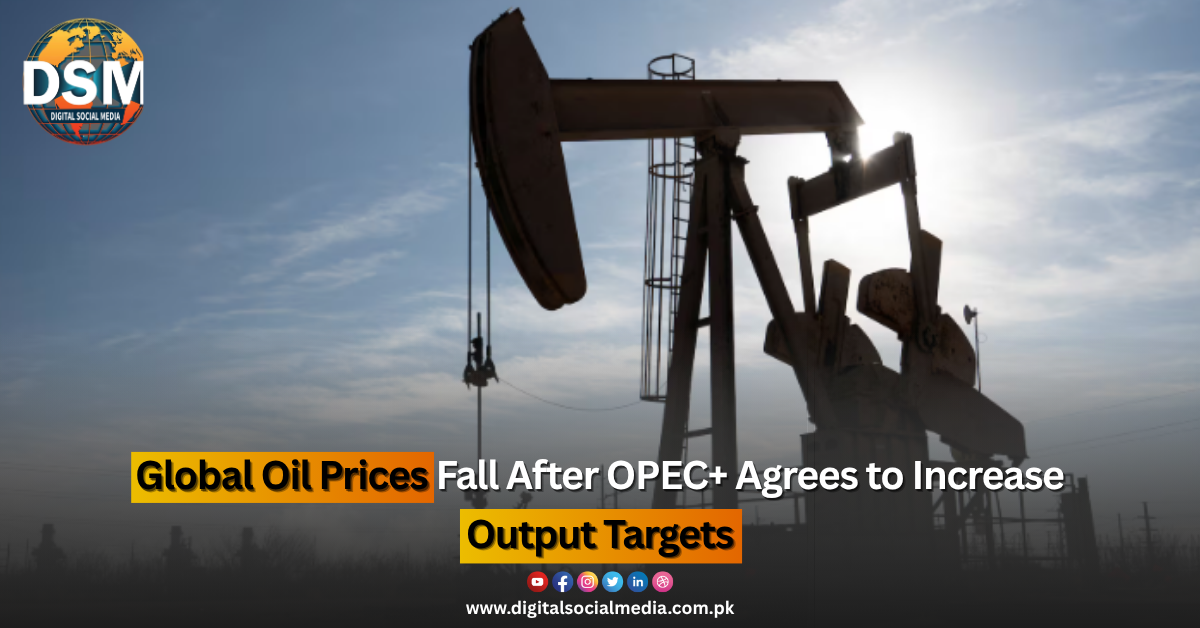
Global Oil Prices Fall After OPEC+ Agrees to Increase Output Targets
Global oil prices edged lower after the Organization of the Petroleum Exporting Countries and its allies (OPEC+) agreed to raise production targets, a move aimed at increasing crude oil supply and maintaining stability in international energy markets. The decision has attracted close attention from investors, governments, and energy analysts, as oil prices continue to play a crucial role in shaping the global economy.
The adjustment in production targets reflects OPEC+’s ongoing efforts to balance market demand with adequate supply while responding to changing economic conditions and geopolitical developments. The announcement immediately influenced crude oil markets, with prices declining as traders anticipated higher future supplies.
OPEC+ Moves to Increase Oil Supply
OPEC+ regularly reviews global market conditions to determine appropriate production levels for its member countries. The latest agreement to increase output targets is intended to ensure sufficient oil supply while supporting long-term market stability.
Higher production generally leads to greater availability of crude oil in international markets. When supply increases faster than demand, prices often come under downward pressure, as traders anticipate improved availability and reduced concerns about shortages.
Energy analysts believe the latest production adjustment demonstrates OPEC+’s commitment to maintaining balance in an increasingly dynamic global energy landscape.
Why Oil Prices Declined
Oil prices are heavily influenced by supply and demand dynamics. Following the announcement of higher production targets, investors interpreted the move as a signal that additional crude oil would enter global markets in the coming months.
With expectations of increased supply, futures markets responded by pushing oil prices lower. Financial markets closely monitor OPEC+ decisions because even relatively small adjustments in production can significantly impact global crude prices.
Market participants also continue to evaluate broader economic conditions, including industrial demand, transportation activity, inflation, and economic growth forecasts.
Impact on Global Energy Markets
Lower oil prices can have mixed effects across different sectors of the global economy. Oil-importing countries generally benefit from reduced energy costs, which may help lower inflation, decrease transportation expenses, and reduce production costs for businesses.
Consumers may also experience relief through lower fuel prices if international market trends are reflected in domestic pricing.
However, oil-exporting nations may face reduced revenue if lower prices persist over an extended period. As a result, governments that rely heavily on energy exports often monitor price movements closely when planning national budgets and economic policies.
Economic Implications for Pakistan
As an oil-importing country, Pakistan closely follows international crude oil prices because they directly influence fuel import costs and foreign exchange spending.
Lower global oil prices can potentially reduce the country’s import bill, ease pressure on inflation, and support overall economic stability. Reduced energy costs may also benefit industries that depend heavily on fuel and transportation.
Economists note that sustained moderation in international oil prices could provide policymakers with greater flexibility in managing inflation and supporting economic growth.
Investors Closely Watch Future Developments
Although the latest OPEC+ decision has contributed to a decline in oil prices, market sentiment remains influenced by several additional factors. Geopolitical developments, global economic growth, energy demand, supply disruptions, and monetary policies continue to shape crude oil markets.
Energy analysts expect volatility to remain a feature of international oil trading, particularly as global economies adapt to changing energy consumption patterns and ongoing geopolitical uncertainties.
Future OPEC+ meetings will likely remain key events for investors seeking guidance on production policies and market direction.
Long-Term Outlook for the Energy Sector
The energy industry continues to undergo significant transformation as countries balance traditional fossil fuel production with investments in renewable energy and sustainability initiatives.
Despite growing interest in alternative energy sources, crude oil remains a critical component of the global economy, supporting transportation, manufacturing, and industrial activity.
OPEC+ is expected to continue adjusting production strategies to respond to evolving market conditions while aiming to maintain long-term stability in global energy markets.
Conclusion
The decline in oil prices following OPEC+’s decision to increase production targets highlights the strong relationship between supply expectations and global energy markets. While lower crude prices may provide relief for oil-importing economies and consumers, they also present challenges for exporting nations. As market conditions continue to evolve, investors and policymakers will closely monitor future OPEC+ decisions and broader economic developments that influence the global oil industry.