
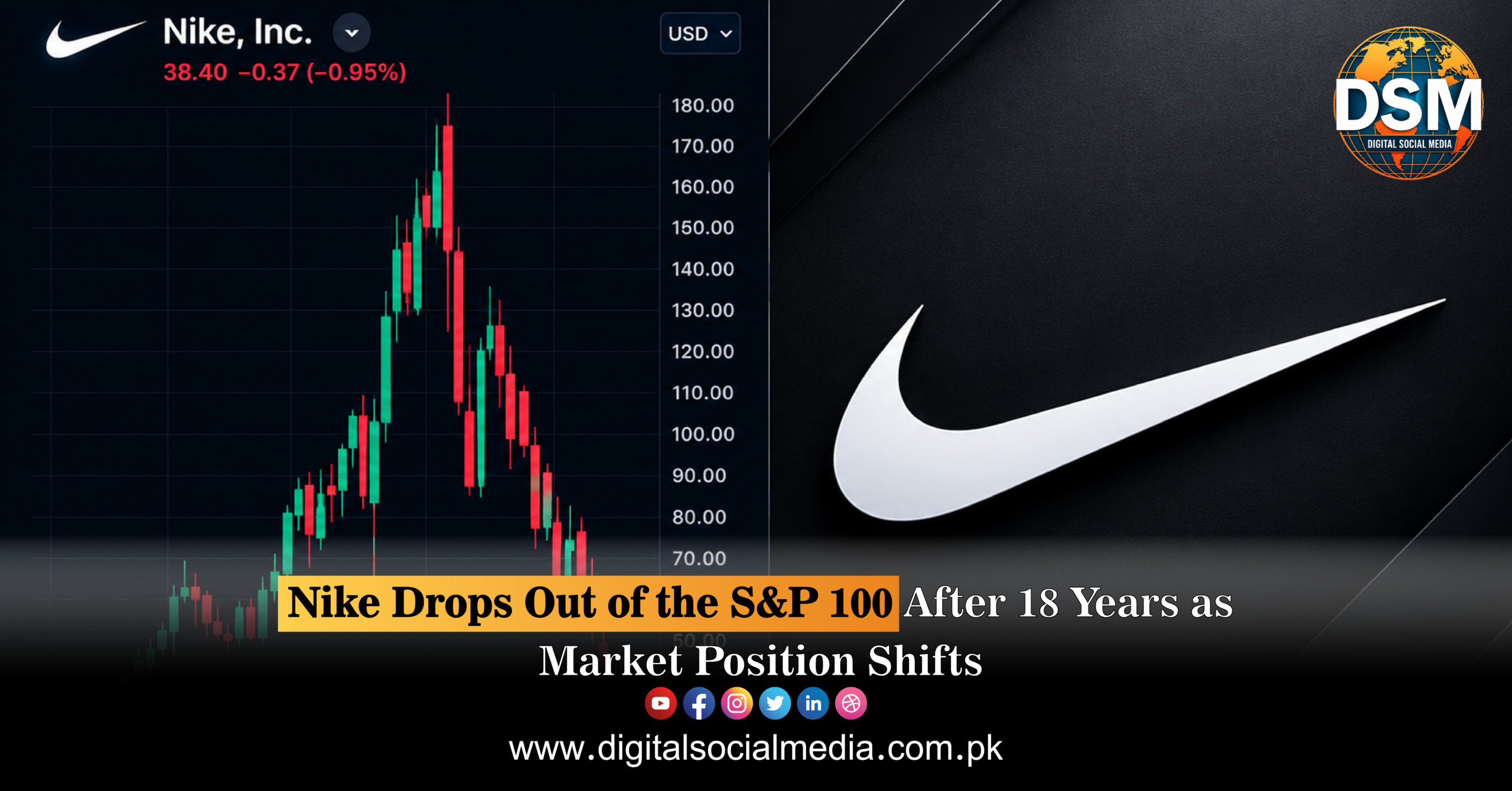
Nike Drops Out of the S&P 100 After 18 Years as Market Position Shifts
Nike, one of the world’s most recognizable sportswear brands, has exited the S&P 100 after 18 years, marking a notable change in the company’s position among America’s largest publicly traded businesses. The development highlights the changing dynamics of the U.S. stock market and comes during a period in which Nike has been working to strengthen its business performance and respond to shifts in the global sportswear industry.
The S&P 100 is made up of 100 major U.S. companies selected from the broader S&P 500 index. Membership in the index is widely viewed as an indicator of a company’s size, significance, and position within the American corporate landscape. Nike’s departure therefore represents more than a change in an index; it reflects the broader challenges the sportswear giant has faced in recent years.
Nike’s 18-Year Run Comes to an End
Nike had been part of the S&P 100 for approximately 18 years, making its removal a significant milestone for the company. During its time in the index, Nike expanded its global presence and maintained its status as one of the leading names in athletic footwear, apparel, and sports equipment.
The company has built a powerful international brand around performance products, sports culture, and high-profile athlete partnerships. Its famous swoosh logo and strong presence across football, basketball, running, training, and lifestyle markets have made Nike a dominant force in the global sportswear business.
However, changes in Nike’s market valuation and the performance of other large U.S. companies have affected its standing among the biggest publicly traded corporations.
What Does Leaving the S&P 100 Mean?
Being removed from the S&P 100 does not mean that Nike is leaving the S&P 500 or that the company has stopped being a major publicly traded corporation. Instead, the change indicates that Nike no longer meets the criteria for inclusion among the 100 largest and most representative companies selected for the S&P 100.
Market capitalization is an important factor in determining the composition of major stock indexes. As the valuations of companies change, index memberships can also change over time.
For investors, index changes can attract attention because they may influence how certain investment funds and portfolios are structured. Some funds are designed to track specific indexes, meaning changes in index membership can potentially affect trading activity surrounding a company.
Challenges Facing Nike
Nike has faced several challenges as competition within the global sportswear market has intensified. Consumer preferences have continued to evolve, while competitors have expanded their offerings across running, lifestyle, basketball, and other athletic categories.
Companies such as Adidas, Puma, New Balance, On, and other emerging brands have increased competition in several markets. Nike has also faced the challenge of balancing its traditional wholesale business with its direct-to-consumer strategy.
The company has invested heavily in digital platforms and its own retail channels, seeking greater control over customer relationships and brand presentation. At the same time, maintaining strong relationships with retail partners remains important for reaching consumers across different markets.
Changing Consumer Trends
The sportswear industry has changed considerably in recent years. Consumers are increasingly interested in products that combine athletic performance with everyday fashion. Running shoes, sneakers, and sports-inspired clothing have become important lifestyle products beyond traditional sporting activities.
Nike continues to have a major advantage through its global brand recognition, athlete partnerships, product development capabilities, and extensive retail network. Nevertheless, changing consumer preferences mean that even established brands must continue introducing products that appeal to new generations of customers.
Nike’s performance in key international markets will also remain important. The company operates across numerous regions, exposing it to different economic conditions, consumer trends, currency movements, and competitive pressures.
Nike’s Position in the Global Sportswear Market
Despite leaving the S&P 100, Nike remains one of the most influential companies in the global athletic footwear and apparel industry. Its products are sold in markets around the world, and its brand continues to have significant cultural influence.
The company has historically used major sporting events and partnerships with elite athletes to maintain its position at the forefront of sports culture. From professional basketball and football to running and other sports, Nike remains deeply connected with athletes and sports fans.
Its ability to maintain this leadership will depend on how effectively it responds to competition, develops new products, manages costs, and connects with consumers.
What Investors May Watch Next
Nike’s future performance will likely remain under close observation by investors and analysts. Key areas of interest include revenue growth, profitability, demand for footwear and apparel, international performance, inventory management, and the company’s ability to regain momentum in important markets.
Investors may also pay attention to Nike’s product pipeline and efforts to strengthen its digital and direct-to-consumer operations. A successful turnaround could help the company improve its market valuation over time, although the competitive environment remains challenging.
The S&P 100 change should therefore be viewed within the broader context of Nike’s financial and strategic performance rather than as an isolated event.
A Significant Moment for a Global Brand
Nike’s exit from the S&P 100 after 18 years is an important moment for the company and a reminder that even the world’s largest brands are affected by changing market conditions. The development reflects shifts in company valuations and the evolving composition of the U.S. corporate market.
While Nike remains a major global sportswear company, its changing market position underscores the importance of continued innovation and adaptation. The brand’s ability to respond to consumer trends, competition, and changing economic conditions will be crucial to its future growth.
As Nike works to strengthen its business and maintain its leadership in athletic footwear and apparel, investors and consumers alike will be watching closely. Its departure from the S&P 100 may mark the end of an 18-year chapter, but it is unlikely to diminish the company’s importance in the global sportswear industry.